
Pokémon
Overview
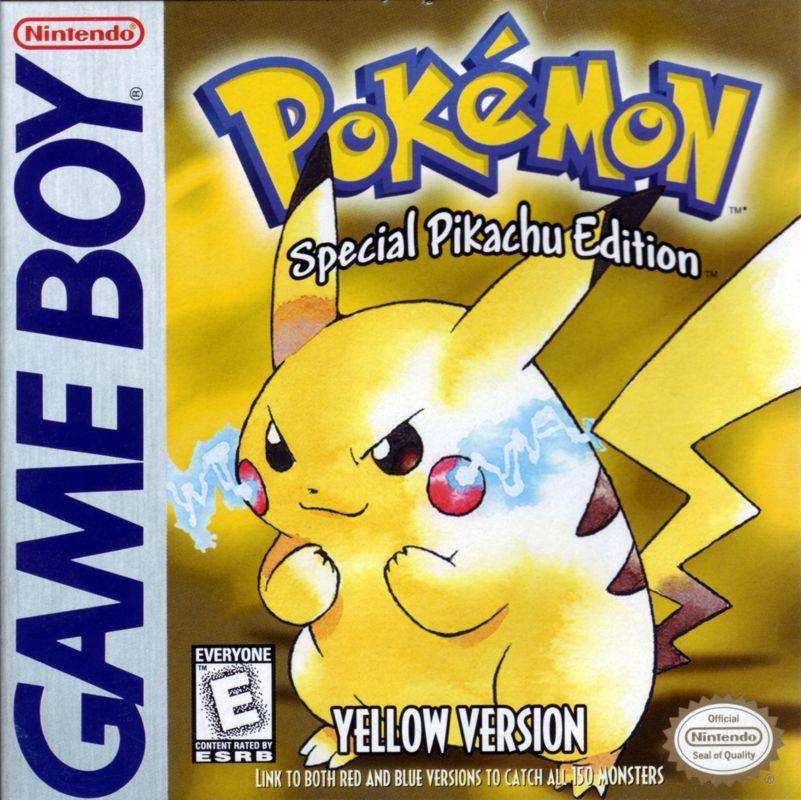
Where do I begin with this one? Not only is about one of the most popular games of all time, this review covers "Generation I" and its remakes, from Pokémon Yellow to Pokémon FireRed, and beyond. I might not even be able to cover everything I want to cover in this review. The box art is taken for Pokémon Yellow, my first experience with this game.
Review
It's very hard to describe Pokémon as a review title. Part of the problem is that the gameplay is kind of dated today and I personally find it a bit too slow-paced and too easy, plus it's something I've gone through before. The fact that it's also thoroughly documented with every bug (and there's a lot of them) noted. Some of what I could write here ended up in the review of Sandwich Islands Publishing's Pokémon Trainer's Guide (including what happened to Pokémon Green)...but the reality is the whole thing is entwined too deeply in a whole part of my life, and a part that was a long time ago.
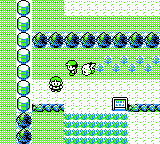
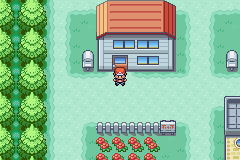
The manual is great, an oversized (for Game Boy games at least) guide that practically functions as a mini-strategy guide to get to Pewter City, the first place where you can earn a badge. You start out in Pallet Town, a tiny village with just three buildings, and told to visit the nearby Professor Oak, a Pokémon researcher who will give you your first Pokémon. He's not there, so you wander into the tall grass. In the Yellow version, he catches a Pikachu. Either way, he takes you back to the lab.
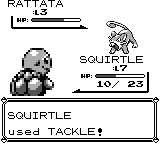
The situation is a bit different in the two versions, but either way, your rival also gets a Pokémon and engages you in a Pokémon battle, which is a bit like a simplified JRPG with more type effects on weaknesses and strengthes. After going to Viridian City to the north (and being forced to backtrack to Pallet Town), your adventure truly begins. Your starter Pokémon will work on the Pidgeys and Rattatas on Route 1, soon taking you through to the Viridian Forest (the first "dungeon" in the game), with you emerging in Pewter City.
The Super Game Boy pallet (also in effect if you use Pokémon Yellow on a Game Boy Color reflects the "color" of the town. All the cities in the game are named after colors (some naturally occurring) and the palette changes based on that. Cerulean City is blue, Saffron City is yellow, Cinnabar Island is dark red, and so forth. But Pewter City is grey. Pewter City is the home of Brock, who uses Rock-type Pokémon (this is where Pokémon Yellow players have to get something else like a Nidoran and diversify their team). Pewter City also has the Pewter City Museum. It's meant to show you hints of the game to come (the "fossil" Pokémon but also has the Columbia space shuttle on display in-game which was the definitive space shuttle, an iconic vehicle that was still in use in 1999...before the infamous disaster that destroyed it and would lead to the end of the Space Shuttle program less than a decade later. (The remakes, which I'll talk about later, remove this).
After defeating Brock, you move onto Route 3, with even more Pokémon Trainers to fight, and after that, Mount Moon. The difficulty spike at Mt. Moon comes from the fact that there are several dead-ends and the whole map is essentially "grass", meaning that Pokémon could come up anywhere. Usually the two that show up here were the common Zubat (which Pikachu could make quick work of) and Geodude (who will "stonewall" Pikachu but worth catching, as a ground/rock type will end up making your core team), with the less-common Paras (forget it, even if its cry is cool) and Clefairy (rare but kinda useless). At the end, after defeating a "Super Nerd" you get the choice between the Dome Fossil and the Helix Fossil, which can eventually become the Kabuto or Omanyte, respectively, but you can only pick one in the game. The other has to be traded for. A Rocket member (replaced by Jessie & James in Yellow, with their anime Koffing/Ekans/Meowth lineup) serves as the boss here.
The remaining seven Gym Leaders are mostly done in a linear fashion, there is opportunity for a few branching paths and sequence breaking but it's obvious as to the "correct" path. You'll end up going through a few more dungeon areas, going to an island for the 7th gym, and then finally making your way back to where you started for the eighth gym and the Elite Four, the powerful trainers who you'll need to beat, plus one more character who's been bugging you the entire way.
Player Notes
Even though this review was posted September 1, 2026, this review has been written in bits and pieces over the last 12+ months, and I debated how I wanted to do it, including a full site-within-a-site like with SimCity 2000 (found here). Such ideas like that predated the existence of Carbon-izer for a few years, but I couldn't figure out what to do with it, especially when it came to original content that no one else offered. Besides, it wouldn't be the Pokémon site I always envisioned.
When I was younger and a HUGE fan, I had a whole "fake" Pokémon site written up in AppleWorks, with various "updates" and stuff, calling it "Pokemania.com" (the actual Pokemania.com redirects and has redirected for years to a long-running page about end times prophecies, which depending on how you talk to will be seen as schizophrenic nonsense or heresy), like in these pages I had updates, I had everything. It was a bit of amalgamation of the Pokémon sites I was used to, most of which are defunct or changed beyond recognition...Pokemasters, Pojo, Serebii.net, and PKMN.CO.UK. I did save some stuff but many of those things are unusable (tiny thumbnails without context, text clippings that got in transfers, etc.).
Port & Rerelease Notes
The release dates above only mark the original Pocket Monsters Red and Pocket Monsters Green in Japan, and Pokémon Red and Pokémon Blue in the United States, the linked Wikipedia page has the release of "Japanese Blue" (the upgraded version of Green) and the more-different Pokémon Yellow, which made the game a bit more like the anime, you got Pikachu instead of a choice between the three starters, as well as Bulbasaur, Charmander, and Squirtle (all three) with dialogue referencing their respective issues where Ash received them. There's not a whole subplot to get to them like there was in the show...for example, you receive Charmander in Route 24 when the guy admits he was a bad trainer and gives it to him, in the show, the episode "Charmander - The Stray Pokémon" has Ash and his friends come across a Charmander waiting on a rock, then it turns out his original trainer bragging that he abandoned him because he was weak, only to try to take him back once Charmander proves himself, claiming his method of leaving him for dead made him stronger, with Charmander rejecting that and sticking with Ash. But with Yellow, there's also a lot of other popular Pokémon that you'll have to trade for like the original titles (some 'mons were left out to encourage trading with the other version), including ones that were on Red AND Blue, like Weedle and Kakuna (and by extension, its fully evolved form Beedrill).
When "Generation III", Pokémon Ruby & Sapphire, were released, it was incompatible with the older Pokémon games, and while a remake of Gold and Silver was made for "Generation IV", a remake of Red and Green (not Blue) were released for Game Boy Advance, Pokémon FireRed & LeafGreen (released in 2004). As of this writing, that's the game I've been playing with, partly to enjoy some of the new QoL features of FRLG while not wanting to sully my memories of playing the original titles.
While I started on an emulator, I moved it to a flash cart for my GBA SP (though I miss the fast-forward button, as some of the battles still take too long). I re-learned some of the things I had forgotten...I would recommend HIGHLY if you're playing anything but Yellow to get Charmander as your starter. It's not just because CHADizard is the best evolution, but for practical reasons. Yes, it makes Brock, the first Gym Leader, tougher, but you won't be able to get any fire types (useful) until much later in the game then when you can pick up water and grass types. You can even buy a Magikarp before Mt. Moon and grind in Mt. Moon. At Level 15 it learns Tackle, and at Level 20 evolves into the powerful Gyarados which is a great addition to your team.
There's more hand-holding in FR/LG, there's in-game instructions (I guess kids don't read manuals anymore...though it doesn't include the early-game walkthrough) but also more free items (the Potion in Viridian City is no longer hidden, and you get five free Poké Balls), gentler on losing (if you lost a match previously you'll lose HALF of your money--with no easy way to get it back as you can't re-fight trainers until the Elite Four), and so on. The one exception I noticed is that Misty is a lot tougher in FR/LG. Her Staryu and Starmie are the same levels as they were in Yellow but she comes equipped with a Super Potion which means that she'll basically fully heal her Pokémon if you don't down them in two turns (in Yellow, she only had X Defend, which was a wake-up call that NPCs had items, too), plus Water Gun is swapped out for the more powerful Water Pulse, which has a chance of confusing your team and making things more difficult.
The other major disadvantage of FR/LG is that it suffers from censorship. I believe it was changes to the way to the ESRB rated games. (Balatro got an E10+ solely on "gambling themes" and probably would've been higher if there had been wagers). The trainer type "Gambler" became "Gamer" (which is an old word for "gambler", before video games). This permeates into the writing, too, including one line on a guy just west as Lavender Town which was translated as "I'm a rambling, gaming dude!" which ruins the rhyme and the joke. (Interestingly, the slot machines were unchanged—not until Pokémon: Let's Go, Pikachu! was this stripped out). Jynx got changed too, but that was already changed within the Pokémon world for reasons beyond the ESRB (and had already been altered in Pokémon Gold & Silver).
The censorship is even worse in the Switch re-releases (just a ROM you'll have to pay full price) as it contains the censored words list, which will reject the names for you, your rival, or your Pokémon if it doesn't like it. This means you won't be able to have most of these jokes show up in your game (mildly NSFW).

The other issue of the FR/LG release is the remixed music is terrible. I ended up using a mod called "GB Sounds" (named after an item introduced in Pokémon HeartGold and SoulSiver) to avoid the issue. There's also the fact there's e-Reader integration for a few event Pokémon. The Switch re-release fixes this by integrating these special items, but they're otherwise difficult to get. At least the base game has Sevii Islands as a new post-game feature.
As far as rereleases go, the original games were released as part of the 3DS Virtual Console (no longer downloadable) and as far as remakes go, Pokémon: Let's Go, Pikachu! and Pokémon: Let's Go, Eevee! were two further remakes for the Nintendo Switch, but weren't well-liked and even more simplified than what the series was turning into. We don't really talk about those games much here.
Additional Content
One of the things I had written when this was supposed a bigger section was a section called "A Word on the Anime", which I'll talk about here.
The anime had a good deal of influence in the world of Pokémon, renaming the heroes of Red and Blue (or Green) as "Ash" and "Gary" (which were name choices in Yellow), as well as iconic characters like Jessie, James, and their talking Meowth, elevating Pikachu to mascot status, but it wasn't a great show. It was treated like a continuity-based show (every episode ending with "To Be Continued") but very little of it was connected to the plot. Oftentimes, Ash and friends would visit some town that wasn't in the game, fix their problems, and be introduced to the featured Pokémon of that episode. Episode 40, "The Battling Eevee Brothers", was about Eevee and the three branching evolutions it had at the time (back when it was just three, as opposed to eight).
The bigger problems with the anime became apparent as Ash was a perennial loser, forgot what he learned, steadily degraded in appearance as animation styles changed, and literally released half of his Pokémon...though admittedly I never got that far.
The only real comparison to Pokémon (as a show) I can think of is One Piece, which shares similarities with Pokémon in that it was dubbed by 4Kids. This has been discussed before and Pokémon did not suffer the same cuts One Piece did. (Very few episodes were left off the American dub). One Piece also ends with "To Be Continued" after every episode, except One Piece actually went somewhere as a storyline, even before 4Kids was done with it, it introduced Nico Robin (voiced by Veronica Taylor in the dub, who was the main voice of Ash), and teased a few elements that would serve as the overarching plot...an ancient super-weapon, a long-forgotten people, and the nature of the mysterious Devil Cursed Fruits. Pokémon did not, and even plots teased went nowhere. When I was a kid, the local WB affiliate changed hands and it vanished from basic cable, leading me to lose access to the show. This was around late 2001 and two mysteries were never solved...why Brock trembled and cringed at the mention of Professor Ivy's name, and what happened to the GS Ball.
Neither of these were answered and just swept under the rug. What really should've happened is something closer to the " Pokémon Adventures" manga (aka Pokémon Special), to prevent power creep, was to just have a new hero after Orange Islands, based after the Gold/Silver protagonist, and fill in what happened with Ash later. The battle on Mt. Silver, one of the greatest moments of the game series, would be even more epic...and then we just continue building on the lore. Alas, that's not how it was to be. Some people think Pokémon Special should've been the one adapted into the manga, and I think there could've still been room to alter the anime's course to be closer to it, but the opportunity for that closed back in 2000.
Screenshots
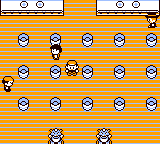
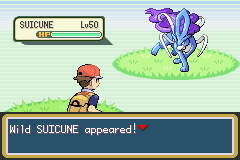
Recommended Guide
As far as the original games go, you can't really go wrong with the guide published in 1999 for Red, Blue, and Yellow by Nintendo. I say this because although all this information exists elsewhere, it's nice to have everything convenient to see what moves you might miss by evolving too early or where you might be able to obtain a Chansey. I might write more in-depth about the other guides, like the disadvantages of the guide for Pokémon FireRed & LeafGreen.