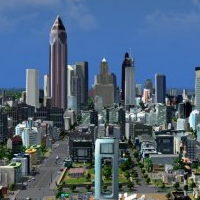
Cities: Skylines
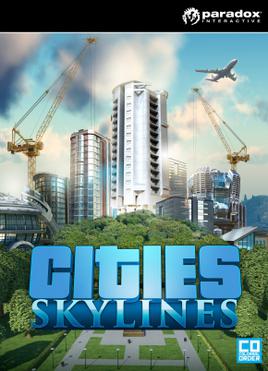
Overview
Cities: Skylines stands as one of my biggest personal disappointments as far as expectations of a video game went, but it was bad, all in the worse ways, and it got worse. The following review is based on the combination of the older review and the even older Games of April 2020 page.
Review
When I wrote the review for SimCity 4, it was one of the longest reviews I had on the site at that point. In the original review, there was this line: "Luckily, there's another contender on the horizon, Cities: Skylines which is looking to be pretty good, and despite not having the marketing team of an EA, managed to sell a million copies within a month. That's probably a third of what SC4 sold about [in] 5 years. Once I get my hands on a copy, then you'll probably see another page like this." In a way I was right, I would write two long reviews that were combined into one.
In my review for SimCity 4, I mentioned that I always wanted to add buildings to the game I saw elsewhere. And of course, in the last 15 years (2005 was what I would think of "peak SimCity 4 era") I've gone places, I've lived in places, I've seen the cities for myself. It wasn't just about the buildings, it's about anything and everything. How a new railroad overpass could decrease emergency response times, how apartment complexes can go from trendy yuppievilles with hotel-like amenities (up to and including full-service restaurants and maid service) to run-down slums, how a particularly hot summer could hurt the economy, how nice homes can keep their value even next to a busy road, how bus routes don't need to be routed toward downtown, how supermarkets could shut down and still pay rent, how the traffic effectively vanishes at night as the bars and the last of the non-24 hour businesses finish closing procedures, and how property taxes really work.
I wanted to see a game that would answer all that, and more, and be the game that could give me what SimCity 4 never could—billboards along the road for easy money-making (just like Yoot Tower), a comprehensive ordinance system, a stoplight timing system that could only appeal to traffic engineers and autists, sprawling parking lots for your commercial structures, a great-looking railroad component to be able to watch the switchers down at the port, a super-wide Katy Freeway-like freeway, and of course, have a great soundtrack like the traditional SimCity games did.
Cities: Skylines does none of that.
Was I expecting too much? Perhaps, but the core issue is that Cities: Skylines just copies a lot of SimCity 4's mechanics without understanding how they work and make it worse in the process because they don't know, and there was no clear vision on the game and what they wanted it to be.
One of the immediate things I noticed is the traffic simulator, which like SimCity (2013) has some major issues of just everyone crowding the roads all at once and not at all realistic. This wouldn't be as bad if the health model wasn't broken as well. Anyone without a clinic within a block or two got sick and died, causing hearses to jam the street. But it's not just the health model, despite these types of games having a heavy emphasis on mass transit, it assumes everyone in your tiny town has a car, and uses it to get everywhere. Cyclists and mass transit enthusiasts are generally insufferable, but when I lived close enough to a gas station where I could see the glowing Shell sign from my front door, I walked the quarter-mile round trip through the alley. Some may argue that Cities: Skylines does allow for pedestrian movement, but mostly through additional pedestrian walkways, as if they're too good to use the sidewalk and use pedestrian crossing signals like normal people. In any case, you can see for yourself what a small town actually looks like if you drive through. The main highway will be busy (especially if it's a vital link between two towns, like if you were visiting Madisonville, Texas at rush hour), but the side streets are a ghost town.
Even the simplest of traffic models simulates road traffic better, specifically the issue that when you have a clogged highway entrance, traffic will start backing up before the entrance, not afterwards. This is what reality is if you've ever driven during rush hour. Entering ramps don't cause problems, it's slowing down before hand. Therefore, there's nothing like ramp metering in the game either. If you were more of a railfan, rails function basically like roads (two way traffic), and there's no way to have single track railroads. Factorio solved this issue gracefully by just a network of "blocks" and railway signals, a train couldn't go forward until no trains were in the block, with other tools that allowed reading the next signal so that slowing down for each potential problem area wasn't an issue.
Additionally, Cities: Skylines doesn't have a grid system like the SimCity titles, it's basically free-form and creates its own grid against roads, which requires another mod to actually try and get your roads in 90° angles, and instead of zoning a huge patch of residential (SimCity 4 even added streets, allowing you to grow subdivisions en masse), your own mouse tries to fight against you as you make smaller zones, but the buildings can't get very large, resulting in lots of skinny skyscrapers and tiny houses that look like "Midgetville communities.
It was also hard to tell what was going on. Instead of the newspaper or newsticker like SimCity did, it featured "Chirper" (a Twitter-like mascot resembling a blue circle with a beak and eyes) and information relayed through "chirps". Like the newspaper and newsticker, it relays important information among irrelevant trash, with some "chirps" triggered by the placement of new buildings in the city, however, the information needed is less than easy to actually find, and the irrelevant items are neither fun nor interesting. In SimCity 3000 and SimCity 4 there was a note from the simulation about the new power plant. Placing a coal power plant (the traditional standard "starting power plant" in the SimCity series) led to this from the Chirper system: "I kinda like the steady production of electricity, but there are environmental factors to consider. #smog". I guess it was supposed to simulate some entitled millennial douchebag, but I'd rather wait until I had a thriving 1M+ population before I had morons in my city who would complain about the environment when the choice was no power. The map was small and I had it to place it somewhere, and you'd think he'd complain more that I was dumping raw sewage into the water systems.
When I picked up the title again in April 2020, after a few minutes of goofing around with the city and observing how a restaurant had major crime problems despite being two blocks from the police station reminded me a bit of what I had heard about SimCity (2013) involving crime and police coverage (via a Zero Punctuation review). And that was at least when it was released, not a different game after five years of various patches. After that, I realized there was nothing the game could offer me. Sure, I could probably download some mods that would at least look more realistic complete with the highway billboards (advertising for Pilot and McDonald's along an exit up ahead might look better on the open road, but hey, someone's got good taste) but the game already pokes along at a sub-30 fps, and that would just grind it down further without making any core simulation changes.
I guess one cool thing the game had was a navigation style similar to Google Earth, using the third button on the mouse to change horizon, but half of the controls were missing (no arrow keys, no use of the right click) and it looks far worse: everything looks like a plastic toy (textureless gray roads, bright, oversaturated vehicles, and buildings that all look like they probably have "Made in China" stamped at the bottom).
Poking around the game files reveals that in the ten gigs of trash the developer stuck me with at least revealed that they didn't help themselves to "pre-downloading" the nine separate DLC expansion packs at a staggering $15 each, and none of them include extra music (that's another $4 each), with none of them actually being worth it. SimCity 4's Rush Hour was only $10 after a mail-in rebate and while it wasn't much, it gave some completion to the game along with some new soundtracks, whereas none of the Cities: Skylines expansions are very deep, mostly adding half-baked gimmicks that just muck up the game further...not that they're conceptually bad, just on raw concept they're pretty awesome and could've done something amazing, but they aren't.
Just looking at a few, "Campus", is a good example. I grew up in a college town, and I could see the effects of what Texas A&M; University did to the area around it. But rather than exploring the traffic/hotel logistics of big sporting events, increasingly hungry-for-land university (and interestingly, this "fight for land" mechanic was mentioned on a "future SimCity wishlist" way back in the mid-1990s, specifically citing University of Texas-Austin as an example), the bars, nightclubs, and restaurants that cluster around it, a young but educated population that works low-wage jobs in the city (and will almost certainly move out later), and the general economic boost it has. Instead, it basically creates a new "campus" zoning option, some vague "campus" related buildings, and a bunch of gimmicks.
Another one, "Airports", could've been good, and I'm listening.City sims have had airports for years, but they generally lack detail and importance. IAH in Houston has an intricate quasi-highway terminal road and the whole thing is connected with direct ramps to highways, businesses oriented toward airport travelers (stuff I briefly covered under this page), its own little "transit system" with park and ride lots, and a big economic engine. But then when I'm told it's basically a drag-and-drop construction set that does nothing to enhance the existing airports (and looks very ugly and out of scale, with planes zipping around curves like racecars). At six minutes in, the review admits all the bad stuff—the airport buildings look worse than the vanilla game pre-made airports (bad sign considering nothing in the vanilla game looks very good), no continuous paved tarmac, runways can't cross each other (very bad, as almost all real airports have multiple crossing runways, either resembling an "X", an "A", or something more complicated), no parking lots, and no general/small aviation. It's quite telling that there's all that coming from what is an extremely generous review perspective. I don't think I could ever be that kind.
Another DLC pack, "Industries", involves full industry types and production chains. While the whole "resource management" seems to be a fad from the Minecraft school of starting from nothing and building up (which can work great in games like Factorio), it's not good in a city simulation game. While it might be fun to see resources move around, C:S takes the approach of actually mining and developing products yourself, and even that isn't handled well. Forget about massive railroad junctions, massive oil refineries, and future remediation sites—all you get is a few more ugly buildings to add to your toy city.
Even SimCity 2000 played with the concept of different industries to focus on (one of which was petrochemicals), all of which had boom/bust cycles. It wasn't something you could see or interact with, but it was there, and didn't even have to be adjusted, but it was there, simulating the cascading effects of an economic recession (factories/businesses close or cut back, people end up losing their jobs, can't afford to go out to go out to eat or shop anymore or as much, so all those close as well, etc.) in broad strokes. For SimCity 2000 it meant a lot of gray-colored abandoned buildings, and the subsequent loss of tax dollars (conversely, when times are good, tax money flows, allowing expansion of city services).
Speaking of the whole "control of the resources", Cities: Skylines tends to take a lot of what SimCity 3000 introduced and got worse with SimCity Societies, Cities XL, and beyond did...the idea of adding commercial buildings and subsidizing them. This includes hypermarkets and luxury hotels, both of which could have multiple instances in a large city (in real life). Even for rare buildings, it would be a far better idea to be "awarded" it (or a one-time payment through "incentives") and then place it where best fit. As hotels are a minor interest of mine, I've noticed resort hotels are usually in smaller satellite towns and often out of the way, requiring trips down side roads (for example, Austin has Hyatt Regency Lost Pines in Bastrop and Kalahari Resorts in Round Rock, both a good distance away from the city). Luxury hotels, on the other hand, are located directly off of major highways or the major roads feeding them, but there's rarely just one. Not to mention there's no way to convert buildings into another use, no turning hotels into senior living centers, no turning defunct supermarkets into fitness clubs, no turning houses into restaurants, no turning fast food buildings into title loan buildings, no turning movie theaters into churches, no turning historic school buildings into loft apartments. (I admit that's a bit of a stretch, but a better city simulator that put more thought into the game and base patches could really start going places with DLC...imagine if SimCity 4 had expansion packs beyond Rush Hour).
Point is, if there was a Venn diagram between "what I expect" and "what the DLC has", the overlap is either tiny or non-existent. It's the same with the actual game. Part of the problem is that it wasn't really meant to be a big-budget AAA game, it was designed to be a budget game (same vein of the off-brand "Tycoon" games that used to crowd the Wal-Mart electronics section), but that could be rectified by simply focusing on a sequel that addresses the issues of the original game while making it a spectacular title. I guess it speaks to the incompetence to the developers and their love of the utterly stupid and pointless "features" (Chirper, particularly) why they kept churning out DLCs for years.
There's a lot more to dislike about C:S but let's go with music. None of the default music of C:S is memorable, just some weird-sounding orchestral noise, not the moody soundtrack of SimCity 2000, the jazzy soundtrack of SimCity 3000, or the diverse electronic music of SimCity 4. Poking around the files, it looks they did go with the GTA route of licensed music and fake commercials, but none of them are particularly memorable or good (definitely did not go with the "greatest hits" approach of GTA), and don't really add to the game. That's the thing also: Cities: Skylines has neither a good sense of humor or realistic, whereas the classic SimCity games did both. With SimCity 2000, you had an incredible (by 1990s standards) simulation of how cities actually worked—land value, crime, traffic, pollution, and other factors had research put into them and the simulation worked with number-crunching, but there were fun parts too...the newspapers often ran silly and irrelevant articles, the presence of the "African Swallow" speed, the whimsical and cool-looking buildings, from the Braun Llama Dome to the Blade Runner-inspired Plymouth Arcology.
While an embarassing fanbase for a game doesn't generally affect the game itself if it's good or not (though is a problem if you wish to discuss or develop it further) it's unbelievable what the cope is for this game. "Oh, but there's realistic traffic simulations!". An emphatic NO to that! I've seen how Cities: Skylines does traffic. Stoplights are hopelessly broken, on-ramps are poorly calibrated, the simulation generates too much traffic per area. "Oh, but there's no grid!" That's not true either. The node-based roadway construction is awkward and builds a grid to the road, which not only results in no true grid but lots of weird-looking dead space. In gridless suburbia, some lots are just going to be bigger than others, but it still works. "Oh, but it's a city painter!" fails too because so many of the placement of the roads look wrong (there's a "stripe painter" mod), and if you were going to go that route you could always try to download a bunch of 3D models on a flat plane.
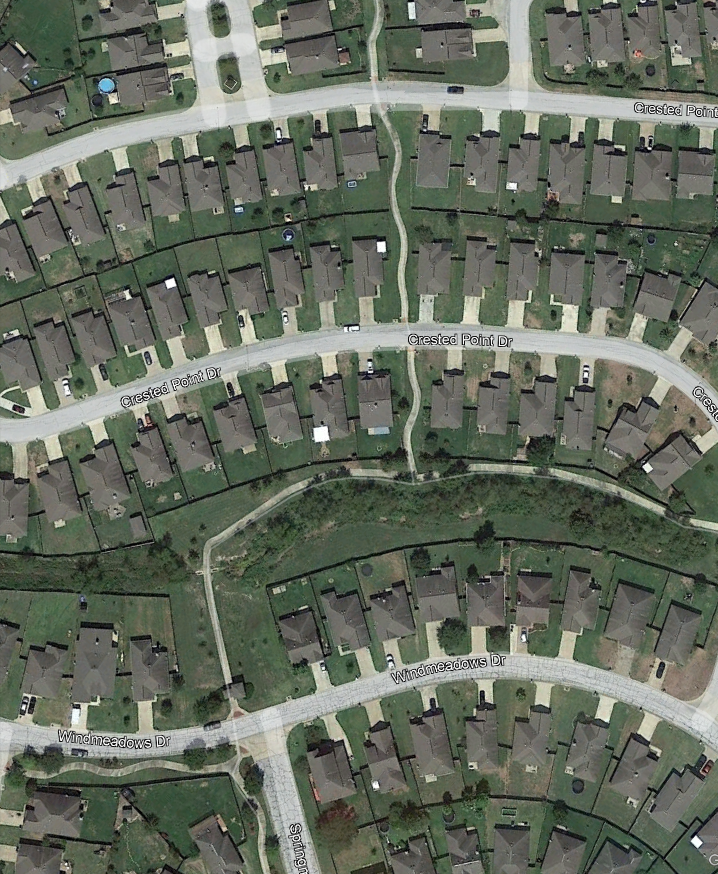
People have said that mods can help Cities: Skylines but they often slow down the game, most of the building-based ones are terrible (SimCity 4 mods are higher quality, generally), they often break due to the developers fiddling around, and they rarely can fix core problems. Banishing Chirper, rebalancing power plants so you don't need a second one when you have more than six blocks, and installing what have you only go so far.
Player Notes
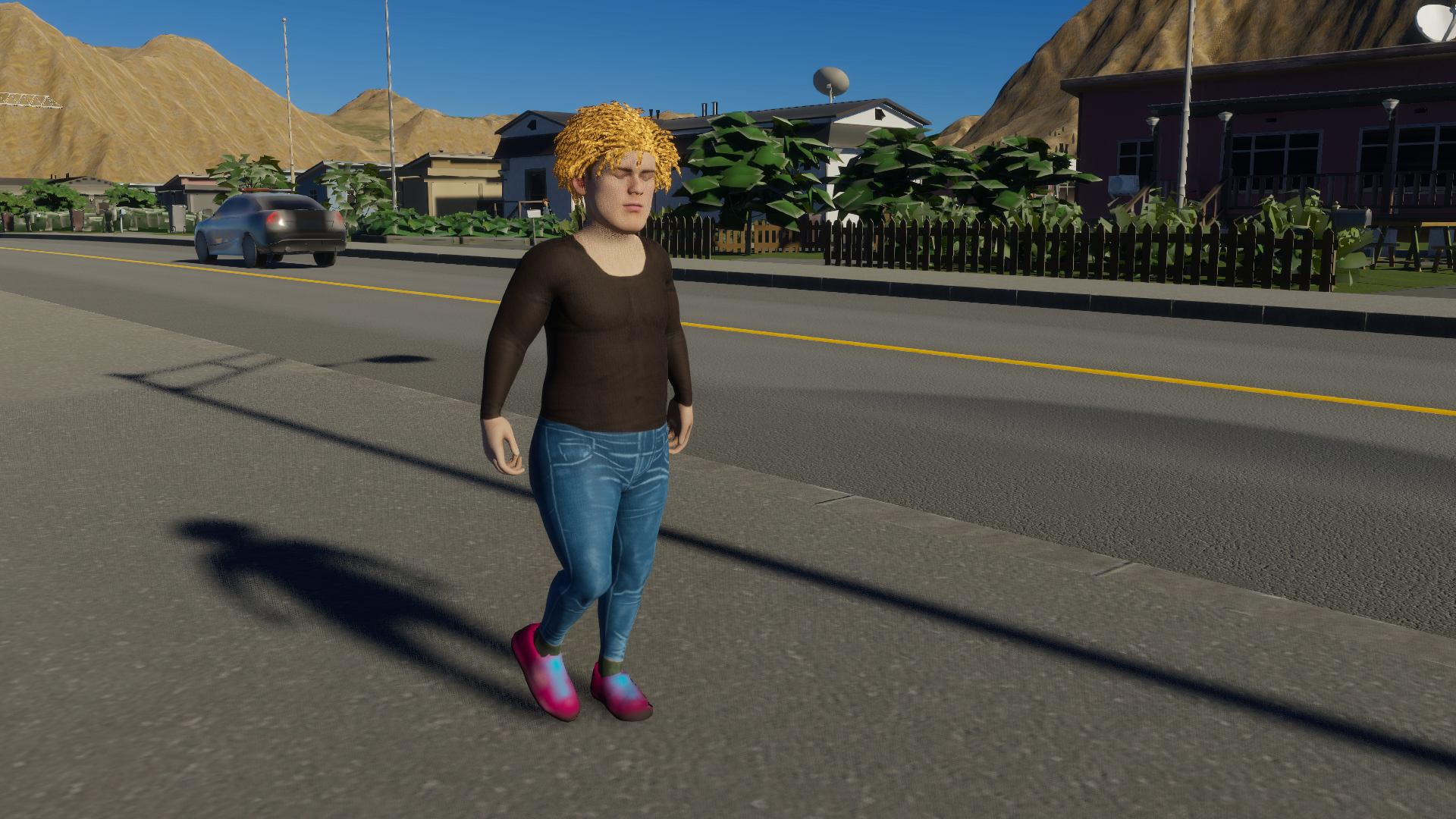
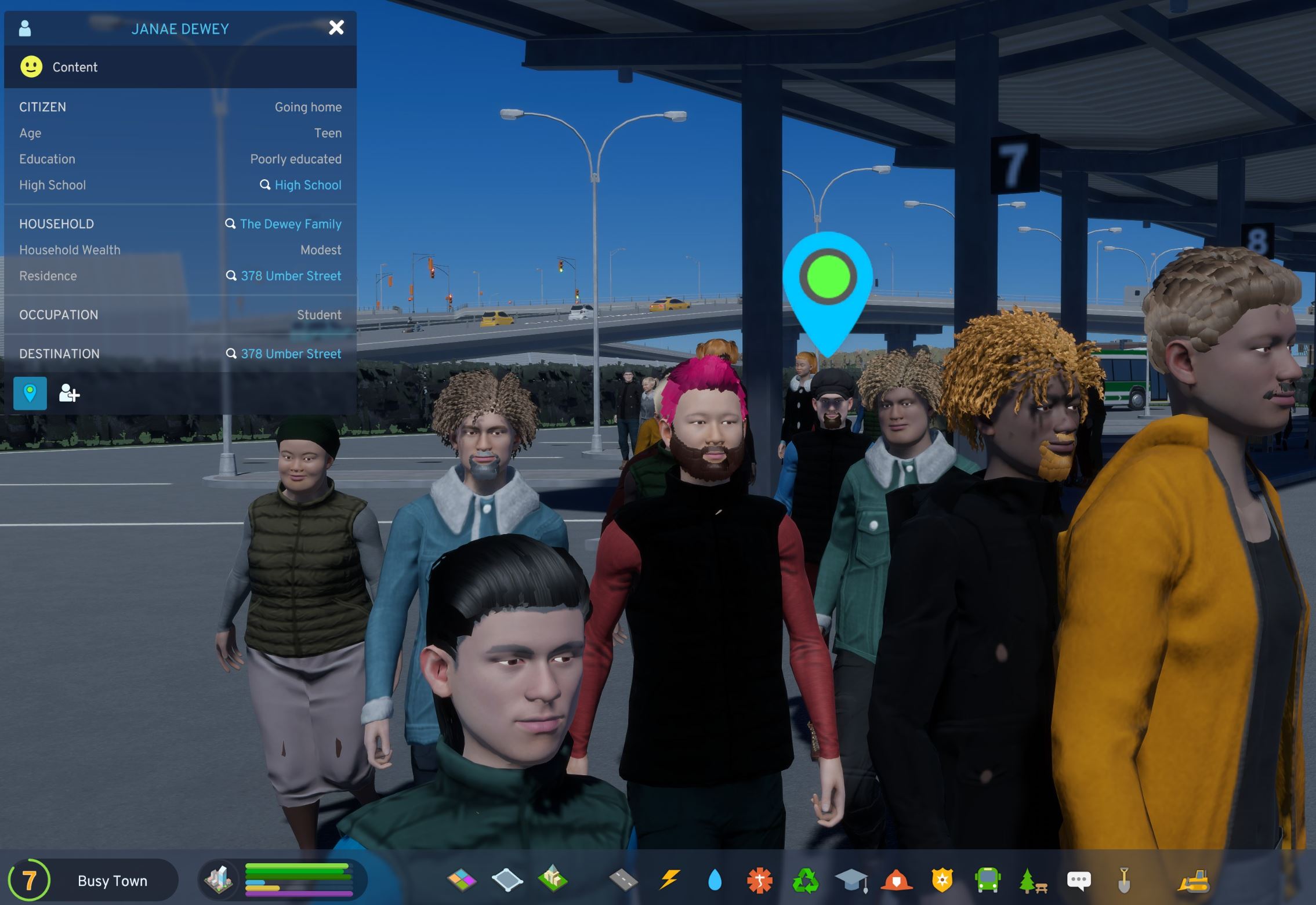
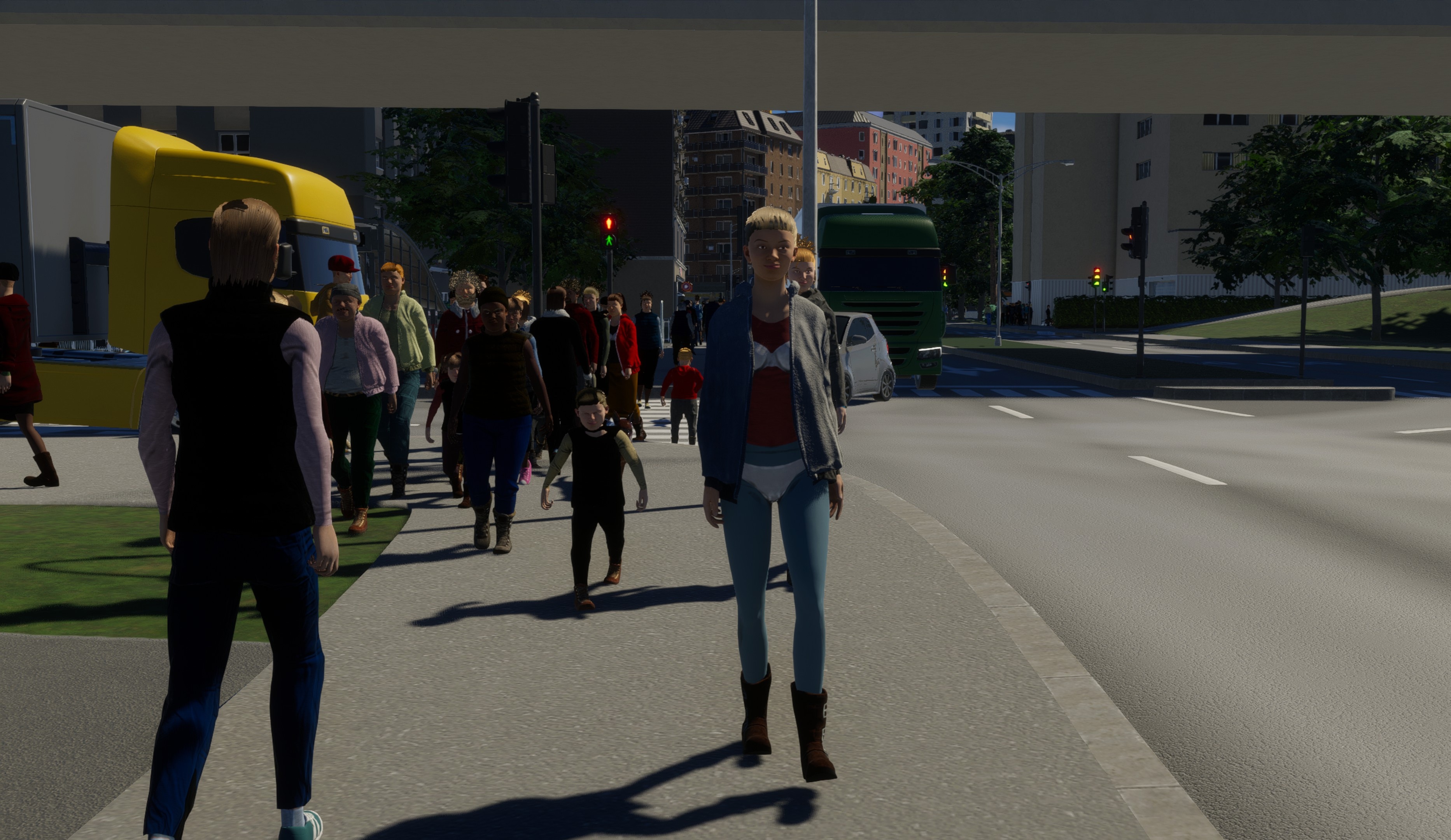
Obviously, I gave Cities: Skylines the worst rating, "Rejected" between the times playing it in 2016 and 2020. When I went back and edited the two reviews into one, one of the changes I made was this, which I originally read: I guess it speaks to the incompetence to the developers and their love of the utterly stupid and pointless "features" (Chirper, particularly) why a sequel doesn't exist. Well, as it turns out, a sequel was made, and even Cities: Skylines defenders couldn't defend it. Mostly it was just the same game but doubling down on the worst features like resource trading and features that nobody asked for but they put in anyway, like fully-modeled citizens, designed for renderings and not actually walking around. The result was a bunch of random golems with mix-and-matched body styles, skin tones, hair coloring, and clothing which made for some rather interesting combinations (example 1, example 2). Teeth were fully modeled despite never being seen (sorry, I don't have a picture for that) and they couldn't understand the system's clothing layering, not that they intended to have a scenario where women ran around in their underwear. These and a bunch of other technical aspects like the horrendous performance on all but the highest-tier PCs (right around the time of the RAM crunch hitting) and delaying DLC/modding resulted in nothing but whining and excuses from the developer, showing them to be the talentless hacks they always were...and it got to the point where Paradox even handed over future development of the game to a different developer, where things have marginally improved but not by much.
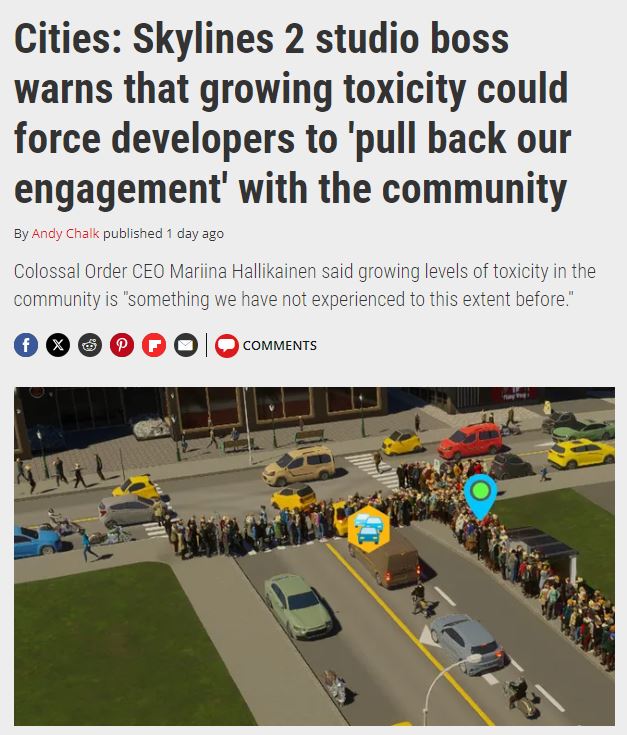
Shortly before the updated version of this review went to press, Paradox Interactive announced at Gamescom LEGO Skylines, a crossover that's basically C:S with LEGO, signifying that Iceflake was already done trying to fix CSII and try something new. With EA about to owned mostly by Saudi Arabia, there's still a golden opportunity left for the true king to return to the throne...